
What to Look for in a Home Inspection in Salinas: A 2026 Buyer’s Guide
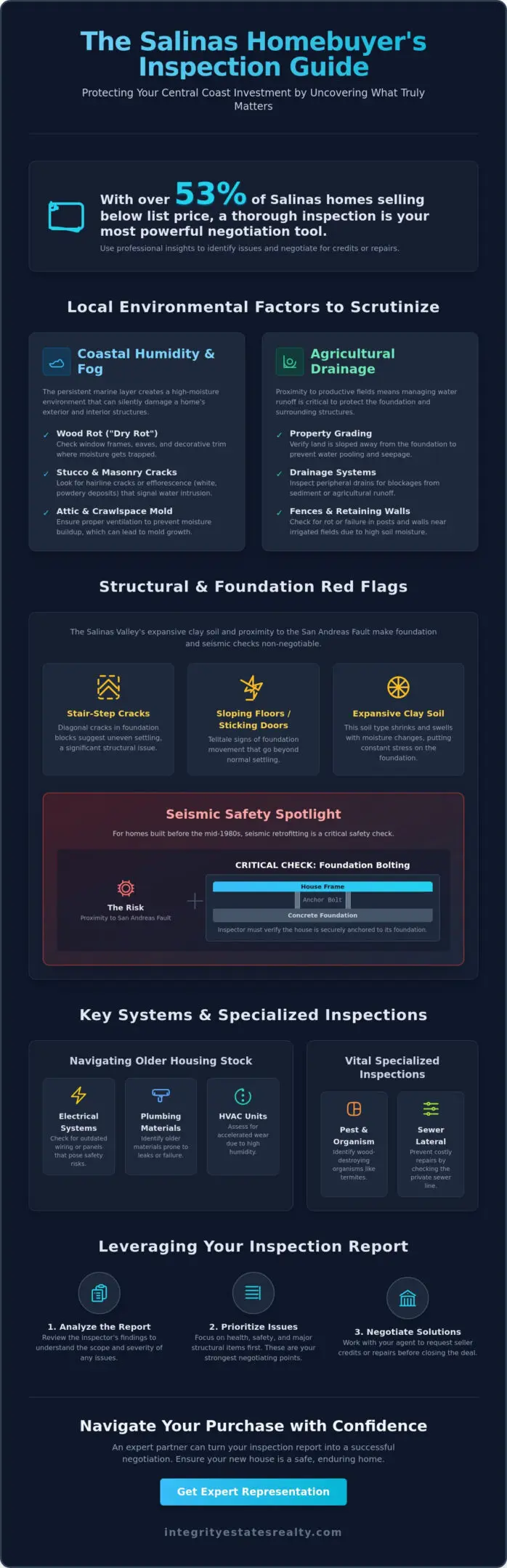
With over 53% of Salinas homes selling below their list price in early 2026, your most powerful negotiation tool isn’t just a competitive offer; it’s the clarity provided by a professional inspection. You likely feel the weight of this decision, balancing the excitement of a Central Coast lifestyle with the valid anxiety of hidden repair costs, seismic stability, or how the marine layer affects a home’s longevity. It’s a high-stakes moment where transparency becomes your greatest asset and peace of mind becomes the priority.
Understanding what to look for in a home inspection in salinas is essential for protecting your investment in our unique local market. This guide provides the specific insights you need to move forward with absolute confidence. We’ll explore the impact of the 2026 California Building Standards Code, identify regional red flags like outdated electrical systems or moisture issues caused by coastal humidity, and explain how to leverage these findings to negotiate credits. You deserve a partner who values your future as much as you do, ensuring your new house is a safe, enduring home.
Key Takeaways
- Learn how to identify the specific impact of Salinas coastal fog and agricultural drainage on a property’s exterior longevity.
- Discover how to spot critical foundation issues like stair-step cracks and the importance of seismic retrofitting for homes near the San Andreas fault zone.
- Gain clarity on what to look for in a home inspection in salinas when evaluating older electrical systems and plumbing materials that could lead to significant repair costs.
- Understand why specialized inspections for wood-destroying organisms and sewer laterals are vital for protecting your financial interests in Monterey County.
- Develop a focused negotiation strategy that prioritizes health and safety items to secure meaningful seller credits or repairs before closing.
The Salinas Environment: Why Local Context Matters in an Inspection
Salinas possesses a microclimate that is as complex as it is beautiful. While the morning fog provides the perfect conditions for the region’s famous agriculture, it presents specific challenges for residential properties. Understanding the intersection of maritime influence and valley geography is the first step in mastering what to look for in a home inspection in salinas. A standard checklist might miss the nuances of expansive clay soils or the corrosive nature of salt-tinged air, but a localized approach ensures your investment is protected from the ground up.
Foundation stability often depends on the soil beneath it. In the Salinas Valley, expansive clay is common. This soil type swells when wet and shrinks during the dry season, creating a cycle of stress for concrete slabs and perimeter foundations. Beyond the dirt, the local climate dictates the lifespan of your mechanical systems. HVAC units in Monterey County often work harder to combat humidity, and those located outdoors are subject to accelerated wear if they aren’t properly maintained against the damp air. To understand the full scope of what a home inspection entails, one must look past the surface and consider how these environmental factors interact over decades.
Coastal Humidity and Exterior Integrity
The persistent marine layer that blankets Salinas each morning isn’t just a scenic backdrop. It’s a source of constant moisture that can penetrate even the smallest gaps in a home’s exterior. Wood rot, often called “dry rot,” is a frequent find in window frames and decorative trim where moisture becomes trapped. Stucco and masonry are also vulnerable; high humidity can lead to efflorescence or hairline cracks that allow water to seep behind the facade. Your inspector should pay close attention to attic and crawlspace ventilation. Without proper airflow, these enclosed areas become breeding grounds for mold, which can compromise both structural integrity and indoor air quality.
Agricultural Drainage and Runoff
Living near the world’s most productive fields brings a unique set of considerations. Property grading is paramount here. You’ll want to ensure the land is sloped to divert heavy seasonal rains away from the foundation, especially if your home sits at a lower elevation than adjacent agricultural plots. Peripheral drainage systems should be clear of sediment or chemical runoff that can accumulate over time. Additionally, perimeter fencing near agricultural borders requires a close look. Soil moisture levels are often higher near irrigated fields, which can lead to premature failure of fence posts or retaining walls if they haven’t been treated for constant ground contact.
Structural and Foundation Red Flags in the Salinas Valley
Foundation integrity serves as the bedrock of your investment. In the Salinas Valley, assessing this structural health requires more than a cursory glance at the baseboards. The region’s unique geography, characterized by its proximity to major fault lines and the specific behavior of the Salinas basin soil, makes foundation scrutiny a top priority. When determining what to look for in a home inspection in salinas, you must distinguish between the expected settling of an older home and signs of active, costly movement.
One of the most visible indicators of distress is the “stair-step” crack. These diagonal fissures typically follow the mortar lines in brick or concrete block foundations. They suggest that one portion of the home is sinking faster than another, often due to uneven moisture levels in the soil. In older neighborhoods like Central Salinas, you might also notice sloping floors or doors that no longer latch. While a comprehensive home inspection checklist covers these basics, a local expert will also evaluate the retaining walls and perimeter slopes for signs of erosion. If a property sits on a slight incline, any movement in the yard can eventually translate to movement in the living room. Identifying these issues early allows you to seek professional residential real estate representation to negotiate necessary repairs before closing.
Seismic Safety and Retrofitting
Salinas sits in a geologically active zone near the San Andreas fault. For homes built before the mid-1980s, seismic retrofitting is a non-negotiable safety check. Your inspector should verify if the home is properly bolted to its foundation. Without these anchors, a significant tremor can cause the structure to slide off its base. Additionally, check for shear walls, which are reinforced plywood panels designed to resist lateral forces, and ensure chimneys are braced to prevent collapse. Understanding the local seismic hazard maps is essential for long-term peace of mind in California.
Foundation Settlement and Soil Issues
The expansive clay soil in the valley is notorious for seasonal shifting. It expands when saturated by winter rains and contracts during the dry summer months. This cycle can lead to “heaving,” where the foundation is pushed upward. You should look for gaps wider than a quarter-inch, as these are often structural red flags rather than cosmetic hairline cracks. Proper drainage is the best defense; ensure gutters and downspouts carry water at least five feet away from the home to maintain consistent soil moisture levels and prevent foundation fatigue.
Internal Systems: Navigating Older Salinas Housing Stock
Salinas is home to many beautifully preserved neighborhoods, but the internal systems of these properties often tell a different story than their charming facades. When you’re deciding what to look for in a home inspection in salinas, the age of the home dictates the level of scrutiny required for its mechanical “organs.” Homes built between the 1920s and 1970s often contain legacy materials that were standard at the time but are now considered significant safety risks or maintenance burdens.
Electrical panels are a primary concern. Many older Salinas residences still utilize Federal Pacific or Zinsco panels. These specific brands have a documented history of failing to trip during a power surge, which can lead to electrical fires. Beyond the panel, insulation levels in pre-1970 homes are frequently insufficient for modern energy standards. If you’re looking at a historic property, your inspector should also look for lead-based paint or asbestos wrapping on old ductwork. Understanding What to Expect During a Home Inspection helps you prepare for these technical findings, ensuring you aren’t caught off guard by the specialized testing required for hazardous materials.
Electrical Safety in Historic Neighborhoods
Ungrounded outlets are a common sight in older Central Salinas homes. These two-prong outlets lack the safety path needed for modern electronics. Worse still is the presence of knob-and-tube wiring, which can become brittle and dangerous when covered by modern insulation. Your inspection should confirm that GFCI protection is active in all “wet” areas like kitchens and bathrooms. It’s also vital to evaluate if the home’s service capacity can handle current appliance loads; a 60-amp service that was plenty in 1950 won’t support today’s high-end kitchens and home offices.
Plumbing and Water Quality
Galvanized steel pipes were the gold standard for decades, but they eventually corrode from the inside out, restricting water flow and potentially leaching minerals into your supply. Switching to copper or PEX is a major investment you’ll want to know about upfront. In our agricultural basin, hard water is a reality. Look for white, crusty buildup on fixtures, which signals a need for a softener system. Don’t skip a sewer lateral scope. This specialized camera test checks the line from the house to the city main. In Salinas, invasive tree roots often compromise these lines, creating a hidden cost that can reach thousands of dollars. Finally, ensure the water heater is double-strapped and properly vented to meet California’s strict seismic safety codes.
While seismic safety is a top priority for California homeowners, incorporating modern fire suppression is another essential step for long-term protection; for expert information on fire sprinkler system installations by Firemex Solutions Inc., click here.
Beyond the Standard Checklist: Specialized Salinas Inspections
A standard inspection provides a vital overview, but it rarely goes deep enough to uncover the specific environmental threats lurking in Monterey County. To truly understand what to look for in a home inspection in salinas, you must look beyond the visible walls and foundations. Specialized reports for wood-destroying organisms and sewer line integrity aren’t just “extras”; they are essential safeguards for your capital. These additional layers of scrutiny provide the transparency needed to protect your future equity.
Our coastal environment creates unique hazards that a generalist might overlook. For example, the high humidity levels in the Salinas Valley can mask air quality issues until they become expensive remediation projects. If a property has experienced moisture intrusion from our heavy seasonal rains, mold and air quality testing should be top of mind. Similarly, while less common than in other regions, radon testing is increasingly requested by cautious buyers in the Salinas basin to ensure the indoor environment is as healthy as it is beautiful.
The WDO (Termite) Inspection
Termites thrive in our temperate climate. A Wood-Destroying Organism (WDO) report is a standalone document that identifies active infestations and past damage. Subterranean termites are common here, but drywood termites and wood-boring beetles also pose significant risks to older Salinas structures. On a California WDO report, “Section 1” items represent active infestations that require immediate treatment, while “Section 2” items denote conditions likely to lead to future problems. Addressing these before the close of escrow is critical for maintaining structural integrity.
Sewer Lateral and Roof Inspections
Most buyers don’t realize a standard home inspection excludes the main sewer line. In the Salinas basin, invasive roots from mature trees frequently crack these pipes, leading to backups that can cost thousands of dollars to remediate. A sewer lateral scope uses a specialized camera to verify the line’s condition all the way to the city main. Similarly, roofing materials in Salinas face a brutal cycle of high UV exposure during the afternoon and damp marine fog at night. This accelerates the degradation of asphalt shingles, making a dedicated roof certification a wise investment.
These specialized reports are often required when securing FHA home loans in Gilroy or Salinas, as lenders want to ensure the collateral is sound. If you’re ready to move forward with a property, our team provides expert residential real estate representation to help you coordinate these vendors and interpret their findings. Having a professional guide ensure no detail is missed is the best way to secure your peace of mind.
Leveraging Your Salinas Inspection Report for Negotiation
Receiving your inspection report can feel overwhelming, especially when it details the specific environmental and structural nuances of the Central Coast. However, this document is not a barrier to your purchase. It’s a strategic tool designed to ensure your investment remains sound. Determining what to look for in a home inspection in salinas is only half the battle; the other half is knowing which findings carry the most weight at the bargaining table. Your goal is to move from a place of uncertainty to one of empowered decision-making.
A sophisticated approach involves prioritizing “Health and Safety” items over cosmetic imperfections. While a cracked tile or an aged carpet might be unappealing, they don’t compromise the home’s integrity. In contrast, issues like the outdated electrical panels or seismic bolting gaps discussed earlier are critical. In the current market, where 53.6% of Salinas homes sold below list price in March 2026, buyers have significant leverage to address these high-priority concerns. Your real estate partner plays a vital role here, helping you interpret technical jargon and determining whether a repair or a closing cost credit better serves your long-term interests.
Navigating the Request for Repair
Crafting a successful request for repair requires a pulse on the local landscape. By analyzing current Gilroy and Salinas real estate market trends, you can gauge how much pressure to apply. If a home is one of the few receiving multiple offers, you might focus only on items required for FHA or VA loan funding, such as moisture remediation or soil stabilization. Always consult with licensed contractors to get accurate repair estimates before submitting your request. This data-driven approach removes emotion from the transaction and keeps the focus on the property’s objective value.
The Final Walk-Through and Peace of Mind
The final walk-through is your last opportunity to ensure the seller has honored their commitments. It’s not a new inspection, but a verification process. You’ll want to confirm that all agreed-upon repairs were completed to a professional standard and that no new issues, like water stains from a recent coastal storm, have appeared during the escrow period. This step is about more than just checking boxes. It’s about the transition from a cautious buyer to a confident homeowner. With a clear maintenance roadmap in hand, you can step into your new Salinas home with the peace of mind that comes from total transparency and ethical representation.
Securing Your Future in the Salinas Valley
Your journey toward homeownership in the Central Coast shouldn’t be clouded by uncertainty. By mastering what to look for in a home inspection in salinas, you transition from a cautious observer to an empowered investor. You now understand how our unique microclimate affects exterior longevity, why seismic retrofitting is essential in historic neighborhoods, and how specialized reports for sewer lines and termites safeguard your equity. These insights are the foundation of a successful, stress-free transaction.
At Integrity Estates Realty, we bring over 20 years of experience in Monterey and Santa Clara Counties to every partnership. Our integrated mortgage and real estate services provide a seamless path to closing, ensuring you have expert guidance at every crossroad. We remain dedicated to transparency and ethical representation, prioritizing your long-term peace of mind above all else. It’s time to turn your vision of a Salinas home into a secure reality. Partner with Integrity Estates Realty for Expert Guidance Through Your Home Inspection and move forward with absolute confidence in your investment.
Frequently Asked Questions
How much does a typical home inspection cost in Salinas, CA?
A standard home inspection in Salinas typically costs between $400 and $600. For a smaller 1,500 square foot property, you might see rates ranging from $300 to $500. These costs vary depending on the age of the structure and whether you add specialized services like mold or pest testing.
Should I attend the home inspection in person?
You should definitely attend the inspection if your schedule allows. Being on-site lets you see specific issues firsthand, making the final written report much easier to interpret. It’s the best opportunity to ask questions about home maintenance and the severity of any discovered defects.
Is a sewer scope inspection really necessary for Salinas homes?
A sewer scope is highly recommended, especially in established Salinas neighborhoods with mature trees. Invasive roots frequently compromise older clay or cast iron pipes, leading to hidden blockages or collapses. Identifying these issues early can save you thousands in future excavation and repair costs.
What are the absolute deal-breakers in a Salinas home inspection?
Major foundation failure, pervasive mold, and hazardous electrical systems like Federal Pacific or Zinsco panels are often considered non-negotiables. These issues represent significant safety risks or high-cost repairs. Knowing what to look for in a home inspection in salinas helps you identify these critical red flags before your contingency period ends.
How long does a home inspection take for a standard three-bedroom house?
A thorough inspection of a standard three-bedroom house usually takes between two and four hours. The exact timeframe depends on the home’s accessibility and the complexity of its systems. Older homes often require more time as the inspector evaluates legacy plumbing and electrical configurations.
Can I use the inspection report to lower the purchase price?
You can certainly use the report as a powerful negotiation tool. With 53.6% of Salinas sales closing below the list price in early 2026, sellers are often willing to provide credits or lower the price for significant repairs. This transparency ensures you don’t inherit a financial burden along with your new home.
What is the difference between a home inspection and an appraisal?
An inspection evaluates the physical condition and safety of the property, while an appraisal determines its fair market value for the lender. The inspector works for you to uncover hidden defects. The appraiser works for the bank to ensure the home’s value supports your loan amount.
Do new construction homes in Salinas need an inspection?
New construction homes absolutely benefit from an independent inspection. It ensures the builder complied with the 2025 California Building Standards Code (Title 24) that went into effect on January 1, 2026. Even new homes can have installation errors or system defects that are best caught before your move-in date.